


Voices Across ACOI: Jason R. Beckrow, DO, FACOI
by ACOI
July 5, 2026
The Practice of Transforming Hardship into Hope
Jason R. Beckrow, DO, FACOI, on the vitality of relationships to growth and healing
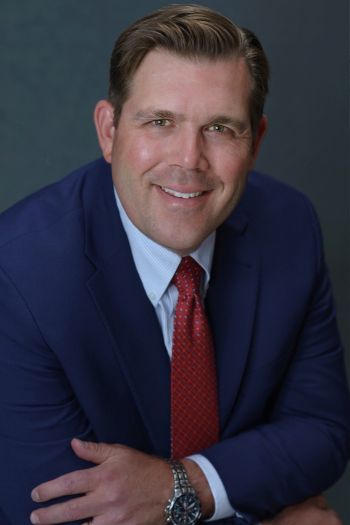
Jason R. Beckrow, DO, FACOI, is familiar with the work of putting hope into practice—and with how vital relationships are to that work. The former oncologist turned hospice and palliative medicine physician is a longtime ACOI member and, more recently, a member of the Physician Wellness Committee. Recently, on behalf of that committee, Dr. Beckrow shared his burnout recovery story, “A Tonic for the Mid-Career Blues,” for ACOinfo. A few years ago, while serving as Medical Director at Caring Circle – Corewell Health in St. Joseph, Michigan, Dr. Beckrow realized he couldn’t continue the way he was going without burning out.
“I was very fortunate to work with Melinda Gruber, PhD, an incredibly supportive CEO,” he said. “I was prepared to resign my post before a major conflict occurred, and she offered, instead, to help find a middle path.” Together, they worked with an executive coach to determine a way forward that would be more supportive and allow Dr. Beckrow to still do the work he wanted to do. In the long run, this led to a career renewal that brought him to teaching; he now teaches medical students at Michigan State College of Osteopathic Medicine (MSUCOM) as well as hospice and palliative medicine fellows at Trillium Institute.
This was not the first time Dr. Beckrow created a hopeful path out of a difficult life situation. His journey into medicine had such a trajectory—though in a far more life-altering way, something he called a “‘big bang’ experience.” When he was fifteen years old, his father died in a car accident; once the shock of that set in, he said, “I decided I needed to do something significant that would be worthy of my dad’s approval.”
His choice proved consequential. “That got me reenergized in school,” he said. “I was good before; I was exceptional after. My dad was my biggest fan, and I wanted to make him proud. And I always knew that I loved science and wanted to help people.” He'd long had the desire to do so through medicine; he said, “I came from a blue-collar family, so it was a pretty big stretch. But my dad worked hard to elevate his station in life so my brother and sister and I could all go to college.” That foundation, along with the support and encouragement of his family and community, helped Dr. Beckrow connect with the resilience he needed. “I had to overcome a lot of imposter syndrome,” he shared. “But I set that as my goal before I could fully eject from that course. Good people in my life would support me and encourage me. I’m really grateful.”
Ultimately, he was accepted to MSCOM for medical school, an experience he found especially powerful in connecting Dr. Beckrow and his fellow students to the human side of medicine. “Michigan State didn’t make us humanitarians, but it allowed that part of us to thrive,” he said. “In my training, I literally did treat microscopic cells and genetic mutations in Petri dish, but [I knew] that’s not what we treat. We’re treating human beings who have lives, who are part of communities. That whole-person approach really appealed to me.”
Finding this place to land after such a major tragedy wasn’t something Dr. Beckrow took for granted: “In life, I’m not sure if everything happens for a reason, but everything that happens can have a purpose,” he said. “Things changed really quickly, and I was lucky to have my dad looking down on me. It was very positive motivation to make something of myself.”
Connecting with the Internal Medicine Community
 During his third year at MSCOM, Dr. Beckrow realized his interest in internal medicine and oncology. At first, he said, “I pretty much knew that being in the ER was where I was supposed to be, for that next car crash.” While he enjoyed all his third-year rotations, working in the ER wasn’t quite the draw he’d expected it to be—particularly because, he said, “I love building relationships and getting to know people. That can be a challenge in the ER.” Dr. Beckrow saw that internal medicine could keep more doors open and allow for a more relationship-oriented experience.
Oncology entered the picture during residency. There, he had a positive experience working with an oncologist who ran a hospice floor, and who ultimately became his first professional mentor. He realized this was the chance to support patients in critical moments that he’d sought: “For most people,” he said, “a diagnosis of cancer is their car crash, their ‘atomic bomb’ moment.”
Now, Dr. Beckrow said, “During my time as an oncologist, I got to meet people—sometimes on the worst day of their lives—and walk a journey with them that sometimes is thankfully celebratory. But it’s not always, which is what drew me to hospice care.” Ever since, he has provided hospice for his oncology patients when needed, getting to do the important work of helping people through their last moments—and still getting to connect with them in doing so.
It was also during residency that Dr. Beckrow became a member of ACOI. He said, “What I love about ACOI, and the convention in particular, is that sense of family. The community, networking, and support. I love that a great deal. And I'm a point where I’m seeing students, residents, early career doctors [there], and I’m the one who can help them out.”
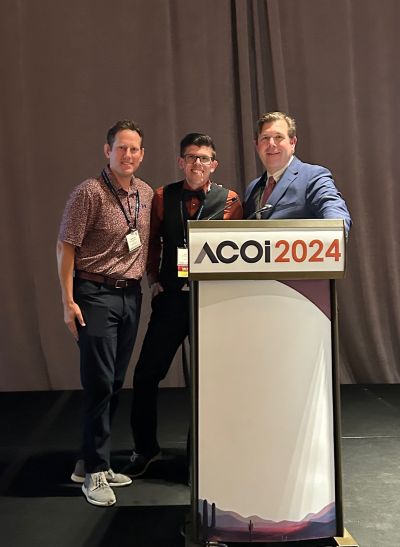
It was at ACOI 2024, in fact, that Dr. Beckrow first became involved with the Physician Wellness Committee. “I just happened to sit in on their session, and I thought, ‘Wow, there’s a lot of people talking about stuff I’ve gone through. I want to be chatting with them,’” he said. “Ultimately, it’s about how we can support our colleagues so they can avoid the pain points we experienced. And if not that, being there to support them afterward.” His participation has led to a strong friendship with fellow ACOI member and Michigan resident Joanne K. Baker, DO, FACOI—who connected him with the broader group—and has proven to be another opportunity to help students and residents learn and grow.
Passing Along Support and Insight
Dr. Beckrow's love of supporting the next generation of physicians mirrors the rejuvenation he has found through teaching. “It really brings me joy,” he said. “I get to hang out with first- and second-year medical students and be reminded of who I used to be. When I see a bit of that imposter syndrome or insecurity, I know I can be one of those voices supporting them the way I’ve been supported.”
Currently, he practices part-time and teaches part-time, a setup he finds supportive and purposeful. “Now, I've got time I could donate,” he said. “I could go play golf every Wednesday, but instead I go to Fee Hall at Michigan State, and work on my teaching skills.” Being an adjunct, Dr. Beckrow said, takes off the pressure to push to a point of burnout in this new role; “I started out as a novice educator,” he said, “and I know every year, with intention, I can become better. My sister taught kindergarten for over 30 years and is a Master Educator. My goal is to be more like her in that regard.”
Going into executive coaching is another aspect of this career recovery. Speaking about the coach who helped him, Dr. Beckrow said, “She challenged me to see pathways other than full-on or full-off. If I could provide a service like she provided for me—give folks alternative pathways to stay engaged and fall in love again with a profession that’s been very good to us—doctors would benefit, the health system would benefit, patients would benefit.”
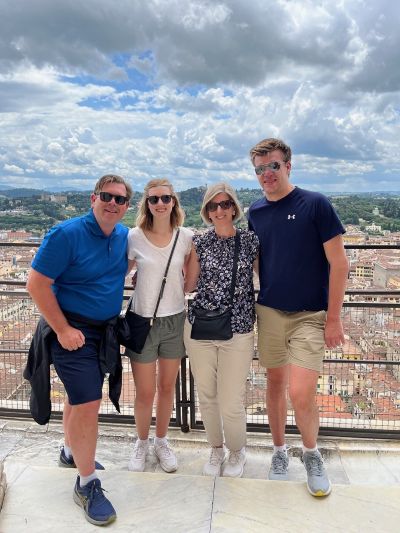
These possibilities keep Dr. Beckrow motivated and hopeful, as does having found stability in both his personal and professional lives. A major part of that is the joy he finds in his family—his two children, Justin and Caroline, and his wife, Kate.
“We‘ve been married for 28 years,” he said. “I’m so blessed to have an amazing, supportive wife. Kate herself is a five-year breast cancer survivor. That’s where that phrase that everything that happens can have a purpose comes from. I had been practicing oncology for years at that point. When it‘s your spouse, it really opens your eyes. I’m grateful that we are on this end of it—and to watch her re-emerge with a renewed sense of purpose, this past year especially.”
This gratitude is nothing short of a guiding force, and Dr. Beckrow is determined to let it lead the way. “I could either say, ‘Man, nothing worked out, or ‘Everything worked out,’ because this has just been an amazing ride. I've had so many unexpected positive things occur,” he said. “That's not easy [to embrace] for a type A physician or scientist—but the best things that have happened have been beyond my control.”
That includes, of course, being able to choose the more passionate path of teaching. “When I connect with students,” he said, “especially those high-achieving, brilliant, compassionate ones with a healthy dose of imposter syndrome, insecurity, all of these things—when I meet them and ask them questions that they can answer themselves, they realize, ‘Maybe I do belong.’ And you see that lightbulb go off. My joy almost exclusively comes from watching others grow and develop, and having a lot of fun doing that.”