

A Tonic for the Mid-Career Blues
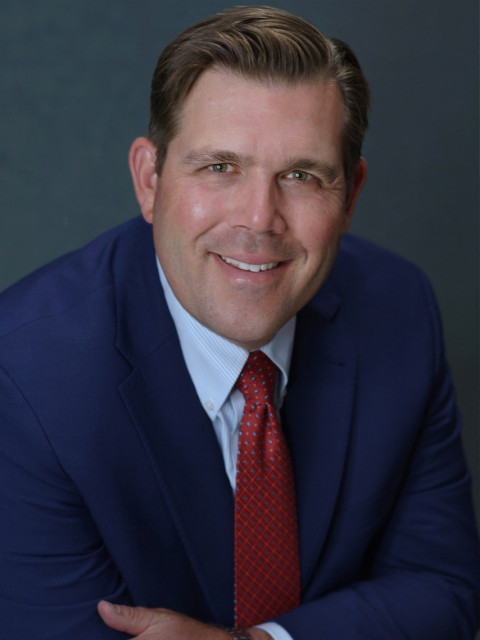
by Jason R. Beckrow, DO, FACOI
April 10, 2026
Have you ever had the uneasy feeling that you might be in danger of burning out?
I have.
In the fall of 2020, I was in a rough spot professionally. At the time, I knew I wasn’t in a great place, but only in retrospect can I fully appreciate how bad it had become. Burnout is a word we hear constantly in medicine. We know it’s common. We know it’s serious, potentially fatal. I remember worrying that if things didn’t change, burnout might get me someday, too. What I didn’t yet realize was that it already had. I was simply one of the last people to recognize it.
Like many physicians, I used to think of burnout as a terminal, one-time event. Once you are burned out, that’s it—career over, passion gone, identity shattered. What I learned instead is something far more hopeful: burnout can be a process, and recovery—while neither quick nor linear—is possible.
I was fortunate. I had a loving family, good friends, supportive colleagues, and just enough good fortune to help me through a difficult period. I also had a mentor who showed up at exactly the right time. I know many physicians reading this may be standing in a similar place, quietly wondering how much longer they can keep doing things the same way. My hope in sharing this story is to offer you a similar mid-career tonic to the one I was given.
Meeting Burnout Without Panic
I met Dr. “Tommy Brookens” (name changed to respect privacy and because Tommy Brookens is a big part of this story. If you know, you know, LOL) in the fall of 2019. Tommy was about fifteen years my senior, not quite ready to retire, and had joined our office part-time just before the pandemic hit. In hindsight, he was a gift from the heavens. Perhaps my personal Gandalf to aid me on my quest to Mordor and hopefully back to The Shire.
As the clinical and operational demands of 2020 intensified, Tommy somehow seemed to grow calmer. While the rest of us felt stretched thinner by the week, he seemed increasingly unflappable. “Never waste a crisis,” he liked to say. So when I admitted to him one summer afternoon that I was afraid I was burning out, he paused, stroked his imaginary goatee, and said, “Yeah… I’ve been burned out at least twice. Maybe three times.”
He said it casually. No drama. No shame.
That moment changed something for me. Tommy helped me understand that frustration, disillusionment, and even burnout can be predictable features of a long medical career, not evidence of personal failure. He reframed burnout as something that can prompt reassessment, recalibration, and even reinvention. Burnout, he acknowledged, can be fatal to a career—but it doesn’t have to be.
Research supports what Tommy modeled intuitively. Physician burnout is common, especially in mid-career, when clinical productivity pressures collide with administrative burden and personal responsibilities at home. National surveys suggest that between 40 to 60% of physicians report at least one symptom of burnout, with emotional exhaustion and depersonalization peaking in mid-career years (Shanafelt et al., 2015; West et al., 2018). Importantly, burnout is not simply an individual resilience problem: it is a systems problem. But individuals still must decide how they will respond when the warning lights come on.
For that perspective, I will always be grateful to Tommy.
The Privilege of Optionality
One's financial health is not irrelevant to this conversation, so I want to be intentional about addressing that elephant in the room. I was in a fortunate position, financially speaking. By that point, I had been practicing for nearly twenty years and had made relatively conservative financial choices early on. My student loans were paid. The kids’ college accounts were reasonably funded. Retirement savings were on track. I wouldn’t claim to have had complete “walk-away money,” but I did have something almost as powerful: options.
I realized I could take a few months—or even longer—off if I needed to and still meet my financial obligations. That realization alone was a relief. It allowed me to think more creatively about what might come next, rather than clinging desperately to what was draining me.
Burnout often narrows perspective. Everything begins to feel binary: stay and suffer, or leave entirely. What financial stability gave me was the psychological space to explore a third path—reconfiguration rather than escape.
Taking Stock of What Still Mattered
Despite everything, I still loved medicine. Like most physicians, I didn’t love all the administrative bologna—the inboxes, meetings, metrics, and performative oversight—but the core work still mattered deeply to me. Helping another human being heal, or at least suffer less, remains an extraordinary privilege.
So I began to take inventory. What parts of my work energized me? What parts depleted me? Did I really need to work full-time? And if I didn’t, how would I want to spend the reclaimed hours?
I put some feelers out into the universe and tried something that doesn’t come naturally to physicians: I waited.
In the summer of 2021, my phone rang. On the other end was the associate dean of my medical school. They wanted to know if I’d be interested in serving as a substitute instructor for introductory courses—clinical skills, physical exam, that sort of thing. They were building their faculty bench and needed experienced clinicians who could step in for limited commitments.
Because I finally had margin in my life, I could say yes. And I have been grateful for that decision ever since.
Going Back to the Beginning
That fall, I taught a first-year physical exam course. These students—now in their residency—were learning how to hold a stethoscope. Some, for the first time, put the earpieces in backward and looked around, puzzled, wondering if their equipment was broken. I smiled, remembering doing the exact same thing decades earlier.
The building hadn’t changed much. I was standing in the same place where I had taken a similar course twenty-five years earlier. It felt like stepping into a time machine. I drove two hours to campus and traveled back in time a quarter century.
What surprised me most was how restorative the experience was.
Although the school paid me to teach, the students gave me far more in return. They reminded me of who I used to be—idealistic, anxious, earnest, and hopeful. Their imposter syndrome was familiar. Their energy was infectious. Their belief that medicine still mattered was bracing.
For a mid-career physician feeling a little crusty and charred, there are few better antidotes than spending time with wonderful young people who have not yet learned to be cynical.
The Power of Portfolio Careers
I now refer to my teaching role as my “golf game.” No one would question it if, at this stage of life, I joined a club and teed it up every Wednesday afternoon. Instead of heading to the first fairway, I head to Fee Hall and tee it up with my students.
I love to golf, but I don’t expect to make the tour in this lifetime. Teaching, on the other hand—who knows?
Like many physicians, I have some natural aptitude. That gets me into the game. But excellence in teaching requires deliberate practice, mentorship, and humility. I’ve met educators with skills I don’t yet have, and they’ve been generous in helping me grow. Each year, with each class, I learn something new. I get a little better.
I’ve even set personal goals around teaching, with the playful hope that after a decade or two I might become a true master of the craft—a Master Teacher, if you will. My sister has been teaching kindergarten for over thirty years. She is a Master Teacher and one of my role models.
The broader lesson is this: variety matters. Research increasingly supports what many physicians discover anecdotally—that portfolio careers, in which clinical work is balanced with teaching, leadership, research, or creative pursuits, are associated with lower burnout and greater professional fulfillment (Shanafelt & Noseworthy, 2017).
Renegotiating the Deal
Today, my schedule looks very different than it once did. I still care for patients, but I have shed a significant portion of the administrative work I previously carried. Early in my career, I believed that accumulating titles was synonymous with advancement. Those titles came with prestige—but also meetings, oversight, and headaches that steadily pulled me away from the work I loved most.
When I finally told my employer I was ready to scale back—and willing to leave if necessary—the conversation changed. Suddenly, they were asking what they could remove from my plate to keep me. It turns out leverage feels different when you are authentically prepared to walk away.
This approach may not work for everyone. Structural inequities and financial realities are not insignificant and perhaps insurmountable barriers. But I suspect many mid-career physicians underestimate the power that comes with experience, scarcity, and clarity about what they are—and are not—willing to do.
I now wear many hats, but only the ones I choose.
From Early Exit to Long View
I spent most of my forties quietly asking myself whether I could retire at fifty. Today, I find myself asking a different question: How much more can I learn, and how much good can I still do before my seventy-fifth birthday?
That shift didn’t happen overnight. It required honest self-assessment, supportive relationships, and the courage to redesign rather than endure. I feel fortunate—and I feel called to share what I’ve learned with others standing at a similar crossroads.
If this story resonates with you, I’d welcome the chance to talk. Burnout thrives in isolation. Reinvention, I’ve found, often begins in conversation.
All the best…J
Selected References
- Shanafelt, T. D., Hasan, O., Dyrbye, L. N., et al. (2015). Changes in burnout and satisfaction with work–life balance in physicians and the general U.S. working population. Mayo Clinic Proceedings, 90(12), 1600–1613.
- West, C. P., Dyrbye, L. N., & Shanafelt, T. D. (2018). Physician burnout: contributors, consequences and solutions. Journal of Internal Medicine, 283(6), 516–529.
- Shanafelt, T. D., & Noseworthy, J. H. (2017). Executive leadership and physician well-being. Mayo Clinic Proceedings, 92(1), 129–146.
- Maslach, C., & Leiter, M. P. (2016). Understanding the burnout experience: recent research and its implications. World Psychiatry, 15(2), 103–111.