


Voices Across ACOI: Dimitri Tito, DO, FACOI
by ACOI
January 5, 2026
Finding Strength through Shared Humanity
Dimitri Tito, DO, FACOI, pursues a passion for global health built on personal connection
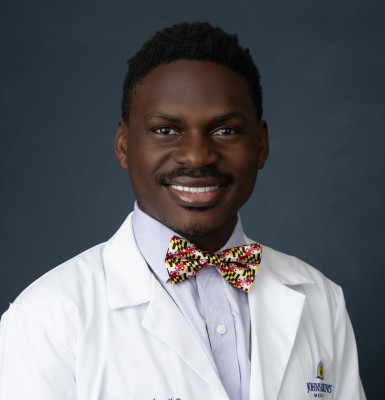 Stories are inherently part of medicine, yet most often, physicians are the ones who field narratives and find threads in what patients share about themselves. That’s why it’s so impactful when physicians relate their own stories to others. And that’s part of what makes the story—and recently published memoir—of Dimitri Tito, DO, FACOI, so compelling.
Dr. Tito’s memoir Spark: A Physician’s Path to Purpose, released in October 2025, is an accomplishment in its own right, and reflects his unique journey, values, and sense of purpose. That said, for Dr. Tito, the heart of it—and perhaps the most meaningful accomplishment—is every relationship that contributed to his path into medicine.
Interestingly, Spark is Dr. Tito's second book. His first is called A Fire in Appalachia: A Journey from Underserved to Serving. It came about as part of a medical school assignment that involved sharing his path to medicine. A mentor of Dr. Tito’s was moved enough by his story that she told him he should write a book about it. But, he said, “It wasn’t until I started my nonprofit that I decided to actually put pen to paper,” he said. Published in 2021, it’s about his commitment to giving back. It also introduces readers to his home country of Cameroon and its culture, as well as his upbringing and his transition to living in America.
A great deal of that first book focuses on his community-based nonprofit organization, The Body Screening Project, which he started in 2018 as a third-year medical student. “The goal was to identify unknown—or not previously known—disease risk factors,” Dr. Tito said. The team screened for cardiovascular diseases in rural West Virginia and provided health education on a weekly basis. It has since expanded and turned into an international nonprofit.
“Twice a year,” he said, “we travel overseas to different countries, and provide free medical care. We follow up to make sure they get the care they need. We also provide education and free consultations for the populations.”
That's where that particular story ends, but Dr. Tito picks up the thread in Spark. “It takes this mission one step further,” he said, going from Dr. Tito’s time in residency to his life as an attending physician. It also highlights why he joined the U.S. military.
“To simply put it,” he said, “I joined because I wanted to give back to the country that has given me so much.” In that sense, Spark primarily focuses on the realities of Dr. Tito’s deployment to combat zones in Iraq and Syria. “It shares lessons I learned in the combat zone,” he said, “and how those lessons have helped me become a better and more compassionate provider.”
Even before his deployment, Dr. Tito’s life was rich with both unique and challenging experiences. He spent his early years in a coastal city in Cameroon, where there was little access to medical care or resources—not even local hospitals.
“I lived there until I was about fifteen,” he said. “My first real exposure to medicine came from the Mercy Ships—large floating hospitals that would dock at our coasts once a month. I remember waking up very early with my family just to see a doctor. These doctors came from places like France, England, and Portugal, and would take time off their busy schedule to treat strangers. That planted a seed. I wanted to become a doctor who provided the same level of care to underserved communities.”
Dr. Tito left Cameroon at age 15 to come to the U.S. “My parents wanted their children to have a better education—they saved enough so I could apply for a visa, and they could pay for the flight,” he shared. He came to Maryland, a diverse state with a large Cameroonian population; despite that, he said, the reality was that fitting in and having to navigate a new culture and language was difficult and challenging. And while his parents were able to help him get to the U.S., he didn’t have any other financial safety net, so it took substantial time to work and save up enough to return to school. But eventually he did, and transferred to the University of Maryland – College Park for his undergraduate education.
Opening Doors to a Passionate Life Path
At the University of Maryland, Dr. Tito found his footing and started making friends, one of whom had a father who was an osteopathic physician. “I asked my friend’s dad if I could shadow him,” said Dr. Tito. “It just changed everything. His approach to patient care reminded me of the community-centered values I grew up with.” When Dr. Tito eventually applied to medical schools, he included several DO programs in his applications. Throughout the application and interview process, he found himself more and more drawn to the DO programs. When West Virginia School of Osteopathic Medicine offered him a scholarship, he said, “I knew I’d found my home in medicine.”
During his third year of medical school, Dr. Tito chose to go into internal medicine, based both on how much he enjoyed each of his rotations and a formative rotation experience at an internal medicine clinic in Petersburg, West Virginia. “I was right there shadowing osteopathic internal medicine doctors,” he said. “Just seeing them in action, seeing them caring for patients, and connecting with [patients’] family members—that was when I fell in love with internal medicine." That human-centered and team-oriented approach truly made the difference for Dr. Tito. “That’s what I enjoy about internal medicine,” he said, “that human connection and multidisciplinary care.”
Discovering Pathways to Meaningful Service
Since finishing medical school and residency, Dr. Tito has made strides as a practicing physician and academic. Currently, he serves as co-director of the Global Health Pathway within the Johns Hopkins Bayview Internal Medicine Residency Program, as well as an assistant professor and medical advisor at Johns Hopkins University School of Medicine.
Much of Dr. Tito’s nonclinical time involves advising and mentoring medical students; that said, the majority of his time is clinical practice, spent seeing patients as a hospitalist at Johns Hopkins Hospital. Between daily clinical duties, advising, research, and developing both the curriculum and partnerships for rotations for the global health program, he keeps himself busy and his days meaningful.
Staying Connected to Stay Motivated and Inspired
Dr. Tito’s story is inspiring; that said, he finds as much motivation in his daily work—in regularly seeing patients improve, interacting with them, and connecting with patients’ family members—as he does these expansive life experiences. His family, both immediate and extended, is another source of inspiration: he and his wife Anita are currently expecting, which brings him joy, as does staying in touch with his nephews and cousins and being an example for them as a first-generation doctor.
Beyond that, his connections with the students he mentors, and with his own mentors, continue to be significant to him. “Seeing my mentors in significant ACOI leadership positions is a drive for me to do more,” Dr. Tito said. “I'd like to be in that position one day as well.”
Clearly, Dr. Tito is moving in that direction, with these relationships and experiences as a foundation. He shared a few reflections to that end, based on his deployment and the subject matter that informed Spark. “As physicians, we get comfortable in our practice, in our daily routine,” he said. Being deployed and living with soldiers was a stark contrast that took him to a place of extreme empathy. “In a nonclinical setting, you just become more compassionate about people’s experiences and understanding them. For me, it was so important because my entire life was so clinical. Putting [on] the shoes of someone else nonclinical and understanding their life, their journey—especially in a high-stress environment—allowed me to become more understanding and provide better care.
“That's the lesson I have for others, [especially] other doctors: to find a way to get uncomfortable, and learn from it, and translate that to your own practice. That will make you a better person.”