

Voices Across ACOI: 2026 Spring Meetings Preview Featuring Dr. Leonard Hock, Dr. Emmie Strassberg, and Dr. Jeffrey Freeman
by ACOI
March 2, 2026
Explore this year’s Spring Meetings presentation topics and highlights.
The 2026 Spring Meetings will be held this month, from March 23 through 27, and it promises to be an enriching time with so much value to offer every osteopathic internist and subspecialist. For this month’s edition of Voices Across ACOI, we spoke with a few of the physicians who will present at this virtual event. Read on for more about their areas of practice and their presentations, as well as agenda and registration information.
Leonard Hock, DO, MACOI, CMD, FAAHPM
Presenting at Clinical Challenges in Hospital Medicine
Presentations: DNR - “Did Not Realize”; "How Long Has He Got, Doc?" Prognosis (Wednesday, March 25, 2:00-2:45PM ET)
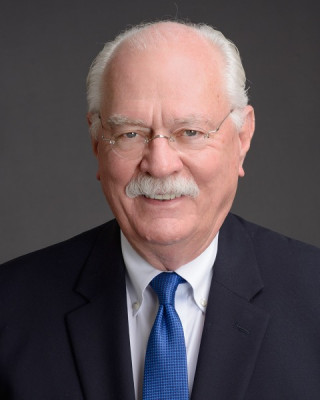 Leonard Hock, DO, MACOI (CMD, FAAHPM), is a palliative consultant based in Orlando, Florida. Board-certified in internal medicine and hospice/palliative care, after several years of focusing on geriatrics, hospice, and palliative care, he now provides inpatient consultations. A graduate of the Kansas City Osteopathic College, he was an ICU director and residency director for several years in Kansas City, which is what led him to geriatrics and hospice/palliative medicine. He is also a Certified Medical Director (CMD) of long-term care facilities, and an active member of the American Medical Directors Association (AMDA), at both the national and local levels.
What brought Dr. Hock to this side of medicine was, he said, “As a critical care doctor for all of those years, most of my patients were older people. I got interested in geriatric frailty and aging. When you start to deal with people who are old, then you start to deal with people who die. It started to occur to me, after talking to the people who love them desperately, that I actually was developing and improving my conversations with families about their loved ones.”
Which brings him to his session “DNR: Did Not Realize.” About it, Dr. Hock said, “I think the ‘Do Not Resuscitate’ order is the most misunderstood goal that we have in medicine. When I say that it should not be ‘Do Not Resuscitate’, it’s because it gives the impression to patients and families and doctors that there’s a dichotomy: either we will resuscitate, or we won’t. But that’s not the truth.” Rather, he said, it should be communicated as being about how people want their loved ones to live out their final moments. The concept, he explained, is not about any particular kind of end-of-life care; rather, it is about the physician’s response.
“Resuscitation efforts only occur at your last heartbeat,” he added. “Not your next, and the one after that. Those are advanced directives and living wills. DNR is, what kind of response do you want when your heart stops? I want [patients] to live the way they want to live. And when their heart stops, I want them to have the response—not care plan—that they want. [Meaning], we do everything we can to resuscitate you or everything we can to make your life peaceful.”
Dr. Hock is especially looking forward to sharing this information with the ACOI community, a group within which he always feels at home. “My physician colleagues, my osteopathic internist brothers and sisters, were always kind and supportive of my presentations and complimentary of the colloquial learning points...and in regards to how my learning points are useful in their everyday practices. For all specialties,” he said. “I mean, the DNR—it doesn’t matter if you’re an ENT or an OB-GYN—you’re going to be asked as an osteopathic internist by your patients and friends about certain situations. These are not niche discussions. These are of general interest to internists of any specialty.”
Jeffrey Freeman, DO, FACOI
Presenting at Clinical Challenges in Hospital Medicine
Presentation: GLP-1 for Hospitalists (Tuesday, March 24, 9:50-10:35 AM ET)
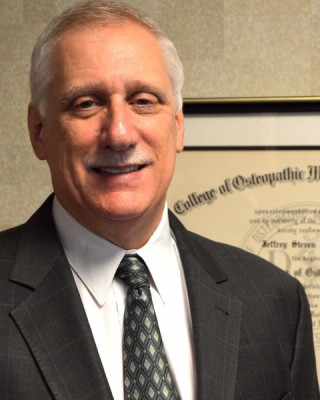 Jeffrey Freeman, DO, FACOI, is an endocrinologist in the Philadelphia area as well as the Chair of the Division of Endocrinology and Professor at the Philadelphia College of Osteopathic Medicine (PCOM). He has taught at PCOM since 1982 and has also been Chair of the subcommittee on metabolic diseases of the Pennsylvania Osteopathic Medical Association for 13 years. He will present at the Spring Meetings on a highly relevant topic, both in endocrinology and in a broader context: GLP-1s, their effects, and their side effects.
“The agents we’ve used—specifically GLPs—have expanded to incorporate GIP in an effort to not only lower blood glucose, but to reduce cardiovascular events, and improve renal status, among other areas,” Dr. Freeman said. “It’s all-encompassing—it is a very exciting area in clinical medicine today.”
This presentation is important, he said, because “We need refreshers—an in-depth understanding of what these medications can do, and what side effects can occur with them. It’s my role to present the current information available on GLP and GIP in the cardiovascular, renal, and obesity space. But also, to forecast other areas in the GLP/GIP space—other medications which can have significant benefits. In the limited time I have, I will try to present as much as I can.”
The takeaways will primarily be how and where GLP-1s should be used in the clinical space, what their side effects are, and what potential future developments could eventually enhance their use. “I'm excited that I have the opportunity to reach out and convey this information to the audience,” he said, especially through ACOI. “ACOI continues to strive to educate osteopathic physicians at a top-notch level. I’m really privileged and honored to be invited to speak with them. [The community is] always interested in learning—and when someone is interested in learning, I’m interested in teaching. I find the best physicians are ones that maintain a level of intellectual curiosity. Those are the best to lecture to, and I always find it enjoyable when I can share my knowledge with them.”
Emmie Strassberg, DO
Presenting at Clinical Challenges in Hospital Medicine
Presentation: Advanced Maternal Age in the Hospital: Clinical Risks, Complications, and Care Considerations (Wednesday, March 25, 10:30-11:15AM ET)
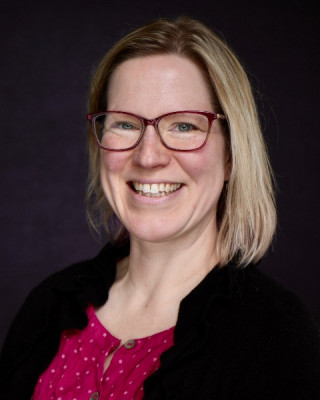 Emmie Strassberg, DO, is an OB-GYN who has been a member of the American College of Osteopathic Obstetricians and Gynecologists (ACOOG) for several years, and by proxy heavily involved with ACOI continuing medical education. A graduate of NOVA Southeastern University College of Osteopathic Medicine, Dr. Strassberg had Robert Hasty, DO, MACOI, as a medical professor; that connection along with a suggestion from the ACOOG medical education director, Andrew Crim, MEd, led to deeper involvement with ACOI continuing medical education (CMEs).
Dr. Strassberg now works in both MFM telemedicine (with a larger telehealth company, Obtelecare) and in preconception counseling through her own private practice, frequently doing inpatient coverage in Alaska, Washington state, Mississippi, and South Carolina. Prior to these roles, she practiced with Shenandoah Valley Maternal Fetal Medicine in Virginia at a traditional hospital doing maternal field medicine, working with patients anywhere from preconception and through pregnancy.
What brought Dr. Strassberg to this practice area? “I really enjoyed my maternal-fetal rotations,” she said. “What draws me most is being able to advocate for complex pregnancy patients and helping them get the care they need. Often, people are afraid to take care of pregnant women appropriately. My mother was very sick with her pregnancies, and I watched her be quite ill when she was pregnant with my brother—hearing all of her stories made me want to advocate for people like her.”
Regarding her session at the 2026 Spring Meetings, Dr. Strassberg shared, “The biggest thing to know is that advanced maternal age is not a diagnosis. It’s a risk factor, and it compounds other risk factors. That’s not always true across the board—if you’ve got someone who’s diabetic, hypertensive, and 40, they’re going to do worse than someone who’s not diabetic or hypertensive and is 45 [years old]. Health problems matter more than age itself.
“From a hospital standpoint,” she continued, “the most important thing to note is, the OBs will be taking care of the genetic and fertility-type risks you get with advanced maternal age. If the patient is hospitalized, there are certain pregnancy changes that are really important for medical hospitalists to know. If the patient is older, they’re going to be more likely to have issues.”
As far as Dr. Strassberg’s participation with ACOI, both through education in general, she expressed how much she gets from the joint conferences between ACOI and ACOOG. “It’s always fun to work with a sister organization and collaborate,” she said. She is also a frequent contributor to the osteopathic profession by way of lobbying efforts—such as through DO Day on the Hill and engaging with both ACOOG’s Congressional Leadership Conference and an OB-GYN PAC—and doing CME work with other organizations, including an upcoming lecture at the Virginia Osteopathic Medical Association. She’s looking forward to continuing this work both through the Spring Meetings and via lobbying efforts in Virginia in March.
Register Now for the 2026 Spring Meetings
Ready to join your ACOI colleagues at the 2026 Spring Meetings? You can explore the agendas to get more information on what to expect:
And, if you haven’t yet, be sure to register before the standard rate closes on March 17!
You can also save $300 when you register for both the 2026 Internal Medicine Comprehensive Update and the 2026 Clinical Challenges in Hospital Medicine. Here’s how to claim your savings: