


Voices Across ACOI: Richard R. Thacker, DO, MACOI
by ACOI
August 3, 2026
Richard R. Thacker, DO, MACOI: Wholeheartedly Strengthening the Osteopathic Community's Present and Future
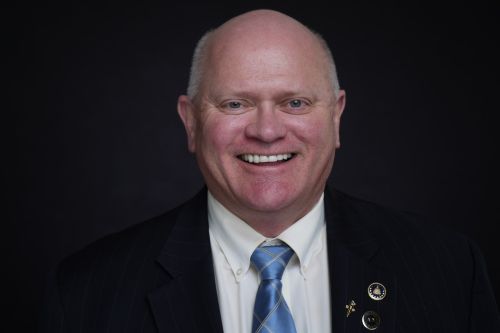
Richard R. Thacker, DO, MACOI, is known in the osteopathic community for several leadership roles, including his current role as Associate Dean of Clinical Sciences and Associate Professor of Internal Medicine at the Alabama College of Osteopathic Medicine (ACOM), and as Past President of the Florida Osteopathic Medical Association (FOMA). Recently, he added an incredibly high honor to that list: he was inaugurated in July 2026 as the President of the American Osteopathic Association (AOA).
Dr. Thacker’s medical career began with a strong connection to osteopathic medicine—in particular, with the medical school he ultimately attended, Nova Southeastern University Dr. Kiran C. Patel College of Osteopathic Medicine (NSU-KPCOM). “They recognized something in me right away,” he said. “I was a nontraditional student—I worked all through college, and it took me eight years to get my four-year degree, starting first at junior college.” In addition, going to night school and working as a radiological aide at a Jacksonville hospital gave Dr. Thacker real-world experience working with people and patients while getting his prerequisites.
Once he completed junior college, he transferred to the University of Florida where he majored in psychology. His medical school interviews made him realize he was ready to commit to the path of osteopathic medicine, and his professional journey to-date prepared him to take on the challenge.
“The bottom line is,” he said, “They appreciated that I was mature, had worked hard to get to that point, and was very committed. I had resilience—I was determined. I think they could see my passion and commitment. And I decided, 'These are my people. This is going to be my home.'”
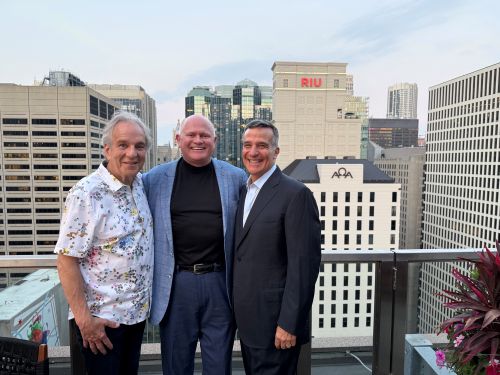
Dr. Thacker immediately connected with his classmates and became class president—which led to becoming president of the school's Student Osteopathic Medicine Association (SOMA) chapter the following year. When it came to his education, he said, "I did very well in clinical settings. I realized internal medicine was a calling for me. I really liked the complexity of adult patients—and I liked hospital-based medicine. In that sense, the training worked out for me." From there, he completed his internal medicine residency at Delaware Valley Medical Center—where he served as Chief Intern as well as Chief Resident during his third year and was also honored as Resident of the Year—before returning to Florida. Dr. Thacker and his family settled in Tallahassee, where he became very active in health policy and with FOMA, serving as FOMA President in 2006 and receiving its Distinguished Service Award in 2026.
As AOA President, Education is a Priority
After building his practice for a number of years, Dr. Thacker stepped into his current role at ACOM in 2018. He has been with the school since its founding, contributing as an administrator, teacher, and advisor; in 2024, the student body honored him by awarding him the ACOM Student Advocate Award.
Dr. Thacker is making osteopathic medical education a key focus as AOA President. He started out with ACOM as a preceptor. It gave him the insight that, with the growth of osteopathic medical schools, he said, “Not only do we need to recruit physicians and PhDs to teach on-campus those first two years—we really have to recruit more preceptors for third- and fourth-years. Particularly osteopathic preceptors. Right now, only 20% or so of preceptors are DOs. We need more DOs teaching our osteopathic students so they can hear the stories—the medicines and mechanics and illnesses and pathophysiology, what every physician needs to learn—but also the osteopathic tenets. To keep in mind and utilize those things that they were taught in their [own] first two years of medical school. That whole osteopathic way of thinking, and way of approaching people.”
Furthermore, he said, "I know the pressures that are on physicians in practice today. To that end, I want to make sure that we’re always recruiting and trying to encourage and inspire other osteopathic physicians to be preceptors and teach. That will make a difference, because to teach is to learn twice. The best physicians, I believe, are the ones that look at themselves as educators as well. If we could just take that next step, and recruit more of our physicians and graduates to teach those coming up behind [them], that would be so beneficial to our community.”
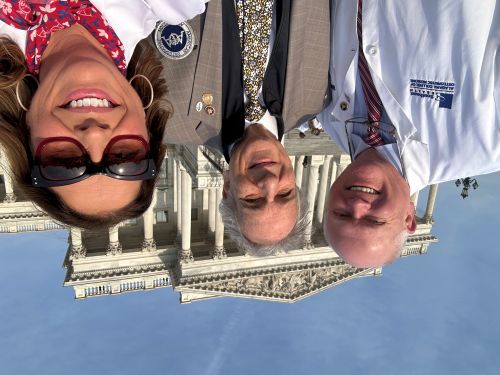 Dr. Thacker’s experience as a member of ACOI has laid strong groundwork for what he wants to do as AOA President. He expressed appreciation for how ACOI provides substantial advocacy for members, internal medicine, subspecialties, and patients—as well as education for both medical students and residents.
ACOI has played a meaningful role in his career path in several ways. In particular, the relationships have made membership deeply valuable. "I want to help young people on a career trajectory like mine. I've still got some gas in the tank, and I want to share that with other folks. ACOI has been another avenue to do that." Along with that, he added, "I just love the leadership. Karen Caruth and Tim McNichol have been fantastic to work with. I truly enjoy spending time with them when we're at national meetings—I love to be with like-minded people. That's what a medical association can do. Help you to be with your people who all have similar interests and objectives and goals. I love to share that."
Focusing on the Future of Osteopathic Medicine
Ultimately, Dr. Thacker aspires to empower the next generation of physicians and lead in a way that reflects the support and guidance he received throughout his career. "When it comes to students who are early in their formative years of their training, we have so much influence on them. The gravity of the osteopathic profession in that first year is so strong. In the second year, it should remain strong. Their orbits get a little further away from the center when they go out into the world of clinical medicine. Osteopathic physicians, particularly those in leadership positions of associations, have to look at how we maintain that gravity and keep these students in our orbit. How do we make sure they see the benefit of that?”
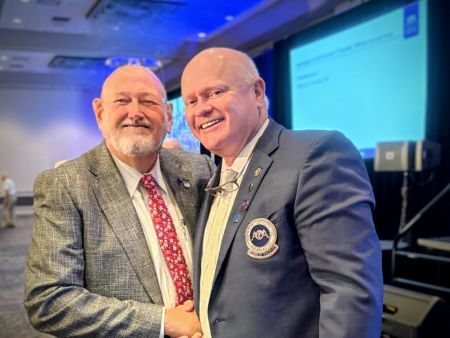 This matters to Dr. Thacker because helping those new generations of osteopathic physicians grow and flourish will invite them to make contributions—of time, expertise, and support—that will strengthen the osteopathic medicine community as a collective. "We need the new physicians in practice to be part of whatever medical specialty college that they are following, and the ACOI, and their state associations," he said. "That commitment will make them better physicians and benefit their patients—and that's why we're here."