

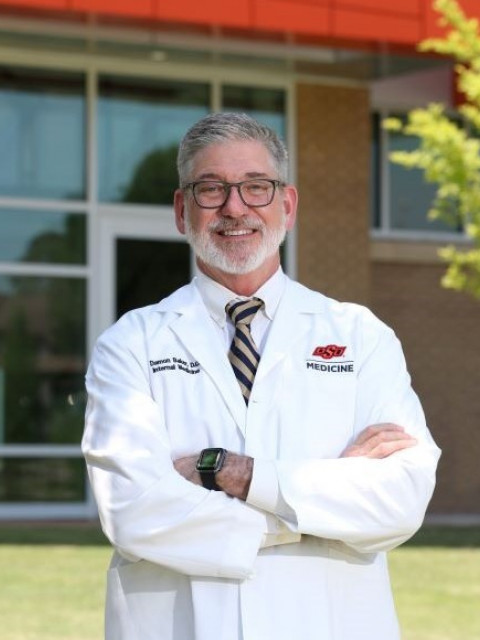
National Heart Month
by Damon L. Baker, DO, MACOI
February 5, 2026
February offers us a timely opportunity to focus on an issue that remains at the very center of our mission as osteopathic internists: the ongoing challenge of cardiovascular disease (CVD). Heart disease continues to be the leading cause of death for men and women in the United States, responsible for 1 in every 3 deaths in 2023.
While cardiovascular disease affects all populations, the impact on women is especially sobering. Between 2021 and 2023, 61.9 million women—44.1% of all U.S. females aged 20 and older—were living with some form of CVD. In 2023 alone, 433,254 women died from cardiovascular disease, accounting for nearly half of all CVD deaths. For coronary heart disease specifically, 6.0 million women were affected across the same time period, with significant disparities among racial and ethnic groups. Despite improvements in awareness over the past decade, many women continue to underestimate their personal risk.
These numbers remind us that prevention must remain front and center. Nearly half of U.S. adults have high blood pressure, yet only 1 in 4 has it adequately controlled—a key concern given hypertension’s central role in the development of heart disease. The American Heart Association’s “Life’s Essential 8” highlights the modifiable lifestyle and metabolic risk factors that shape cardiovascular outcomes: diet quality, physical activity, nicotine exposure, sleep, body mass index, blood lipids, blood glucose, and blood pressure. These are areas where osteopathic internists excel in patient counseling, whole-person care, and longitudinal follow-up.
At the same time, therapeutic advances—from refined percutaneous coronary interventions to broader use of direct oral anticoagulants and sophisticated heart failure therapies—continue to enhance our ability to treat patients effectively. Women underwent approximately 140,835 percutaneous coronary interventions in 2022, reflecting ongoing improvements in both access to and application of advanced cardiovascular therapies. As osteopathic physicians, we bring a distinctive perspective to the integration of these innovations, ensuring that high-quality, evidence-based treatments align with the holistic principles that guide our profession.
Osteopathic internists are uniquely positioned to advance cardiovascular health by combining preventive strategies, patient centered care, and skilled clinical management. This month, I encourage all of us—clinicians, educators, trainees, and leaders—to recommit to the foundational practices that reduce risk and save lives: blood pressure control, smoking cessation support, culturally informed patient education, early recognition of women’s cardiac symptoms, and proactive management of metabolic and vascular health.
As we honor National Heart Month, let us use this time to reaffirm our commitment to improving cardiovascular outcomes for our patients and communities. By championing prevention, embracing innovation, and applying the osteopathic philosophy of whole-person care, we continue to lead the way in combating the nation’s most persistent—and preventable—chronic disease.
Thank you all for your dedication to our patients, students, residents, and fellows and to our profession.
Until next time,
Damon