

If A.T. Still Were Here, He’d Probably Ask Us to Log into the Portal
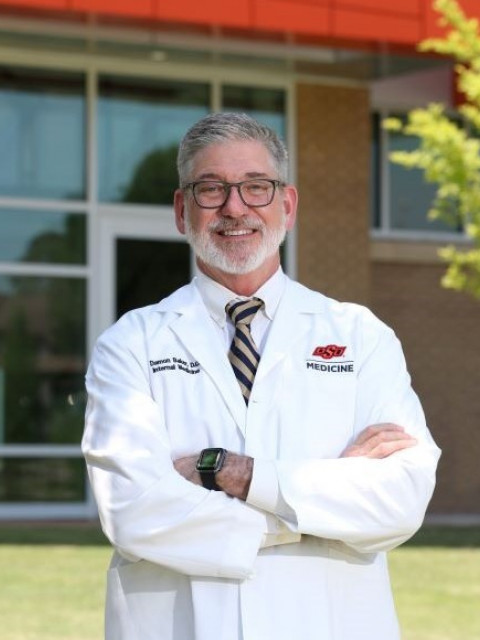
by Damon L. Baker, DO, MACOI
April 2, 2026
I sometimes wonder what A.T. Still would think if he walked into one of our clinics or hospitals today.
I imagine he would marvel at what we can now see, measure, and image. He would appreciate the lifesaving therapies we prescribe, the precision of modern diagnostics, and the speed with which information moves—once he figured out the password, completed the two-factor authentication, and reset it twice.
He might, however, be mildly perplexed by how often we treat patients without actually touching them.
To be fair, Dr. Still practiced in an era without patient portals, quality dashboards, or pop-ups reminding us that we have one unsigned order from three days ago. He did not have to document “shared decision making” in 14 separate fields, nor did he have to justify why a patient with a pulse of 42 might benefit from cardiology seeing them before discharge.
And yet, if he were standing beside us today, I suspect he would recognize something familiar.
Because beneath the layers of technology, protocols, and processes, the heart of osteopathic medicine remains exactly where he left it: focused on the person, not merely on the problem list.
Osteopathic internists have always lived in the space between complexity and clarity. We care for patients whose conditions rarely fit into a single guideline or specialty silo. We synthesize, prioritize, and interpret not just lab values, but lives. Long before “whole person care” became a marketing phrase, we were practicing it out of necessity.
Dr. Still believed the body had an inherent capacity for health and balance if we learned to understand it properly. Today, we might rephrase that belief using updated language—biopsychosocial models, social determinants of health, interdisciplinary care—but the underlying philosophy has not changed.
What has changed is the environment in which we practice.
Modern medicine asks a great deal of internists. We are asked to be efficient but thorough, empathic but expedient, technologically fluent but human. We are asked to manage extraordinary complexity, often with limited time, increasing administrative burden, and an ever-expanding inbox.
And yet, osteopathic internists continue to show up—thoughtful, adaptable, and grounded in a philosophy that values context over checkboxes.
That is not accidental. It is the product of our training, our mindset, and the community that supports us.
The American College of Osteopathic Internists exists to preserve that identity and help it thrive in a changing world. ACOI is your professional home—a place where the uniquely osteopathic perspective on internal medicine is not only understood but celebrated. It is where mentorship is shared, leadership is cultivated, and our collective voice helps shape the future of our profession.
If A.T. Still were here today, I think he would encourage us to embrace progress—while remembering that no algorithm can replace clinical judgment, and no technology can substitute connection.
He might still struggle with the portal, of course. But he would recognize the osteopathic internist standing at the center of modern medicine, doing what we have always done: caring for the whole person, even when the system makes that harder than it should be.
Thank you for the work you do every day, and for carrying forward a tradition that remains as relevant now as it was more than a century ago.
Until next time,
Damon