

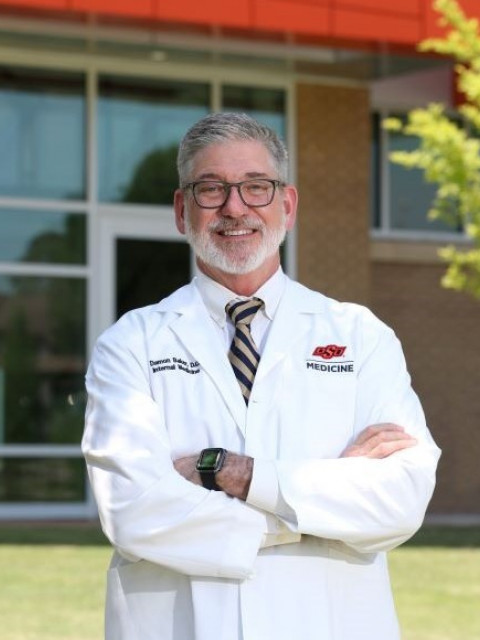
I Am an Osteopathic Physician, Not a Provider
by Damon L. Baker, DO, MACOI
March 2, 2026
In recent years, a subtle but significant shift has crept into the language of health care. Increasingly, those of us who have dedicated more than a decade of our lives to becoming fully licensed physicians find ourselves labeled with the catch-all term “provider.” It has become common in legislation, administrative documents, insurance policies, and even hospital vernacular.
But I am not a “provider.” I am an osteopathic physician.
This distinction is not about ego, hierarchy, or dismissing the vital contributions of other health professions. It is about clarity, honesty, and protecting the integrity of patient care. Titles matter because patients rely on them to understand who is treating them—and what training, knowledge, and clinical judgment that person brings into the exam room.
The Meaning of “Physician”
To be incredibly specific about what a physician is, an osteopathic physician (DO):
- Has a four-year undergraduate degree.
- Completes four years of medical school with comprehensive biomedical, clinical, and hands-on osteopathic manipulative training.
- Undergoes three to seven years of residency training.
- Passes national board examinations.
- Obtains full medical licensure in all 50 states.
- Has the unrestricted ability to diagnose, treat, perform procedures and surgery, and prescribe without supervision.
This level of training, expertise, and responsibility is distinct. It is also why the public has long recognized physicians—osteopathic and allopathic alike—as the clinicians ultimately accountable for patient outcomes.
What’s in a Title? More Than You Might Think.
Today, many health professionals use titles and receive degrees that include the word “doctor”: doctor of nursing practice (DNP), doctor of physical therapy (DPT), doctor of psychology, doctor of optometry, and others. These achievements are significant in their respective fields, and these professionals provide essential, valued contributions to patient care.
But these professionals are not physicians, and their training pathways differ dramatically. Here are some of the biggest distinctions.
Nurse Practitioners (NPs) and DNPs
- Most NP programs range from two to four years post-bachelor’s.
- Clinical training averages between 500 and 1,000 hours.
- Some NP programs are fully or mostly online.
- DNPs earn a doctoral degree, not a medical doctorate, and DNP curricula do not provide the depth or breadth of medical training required of physicians.
Physician Assistants (PAs)
- PA programs typically last two to three years.
- PA clinical rotations are meaningful but limited in scope when compared with the length, variety, and intensity of physician residencies.
- PAs are trained in a medical model, but not to the same depth, and they traditionally require physician supervision (though legislation around this is changing in some states).
Physical Therapists (DPTs) and Other Doctoral-Level Professionals
- The “doctor” title refers to academic achievement within the profession, not the legal or clinical responsibilities of a physician.
- Their training is not focused on whole-person diagnosis or medical management.
All of these professionals serve vital roles. They are our colleagues, collaborators, and to many of us, close friends. But none of these pathways confer the same scope, responsibility, or comprehensive training as that of a physician.
The Importance of Clarity for Patients
When a patient walks into an exam room, they deserve to know exactly whom they are seeing. They deserve transparency about the training behind the white coat.
Substituting the word “provider” blurs this distinction and can create confusion, especially for patients managing chronic diseases, navigating complex medical decisions, or seeking specialist care.
The solution is simple: call each profession what it is. Respect every discipline for its expertise. But let's not erase the physician identity under a generic label created for billing convenience.
Why It Matters for Osteopathic Physicians
For DOs, the issue is even more personal. We already work to educate the public about what “osteopathic” means. To me, it means the approach to the person behind the diagnosis: the integration of mind, body, and spirit in every facet of what we do; how we take a history; how we incorporate a structural survey in our physical exam; and how we cannot separate those things from our diagnostic and treatment algorithms.
When systems reduce us to “providers,” they undermine not only the medical profession, but also the unique values and contributions of osteopathic medicine. Our patients seek partnership, compassion, and whole-person care. They deserve to know that the person guiding their medical decisions has the training and licensure of a physician.
A Call to Reclaim Our Title
Words shape perception, perception shapes policy, and policy shapes the future of our profession.
So let’s be clear—within our institutions, our electronic medical records, our legislative advocacy, our conversations with hospital administrators, and our own daily language.
We are physicians. More specifically, we are osteopathic physicians.
We diagnose, we treat, we heal, we teach, and we lead. The public depends on us, and they deserve to know exactly who we are.