

A Seat at the Table: A Medical Student’s Perspective on Practice Management
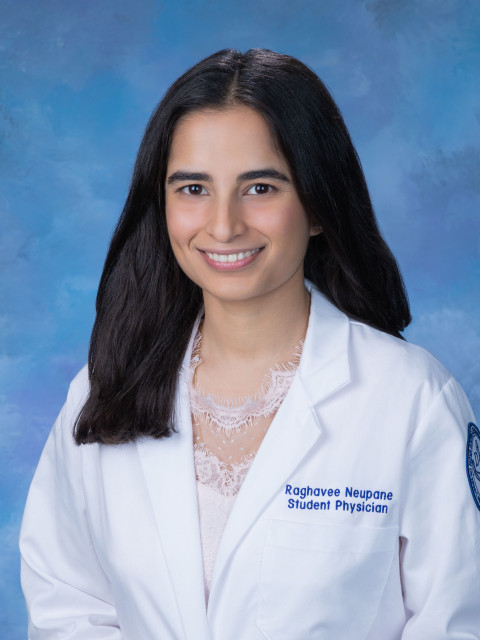
by Raghavee Neupane, MPH, OMS-III
August 13, 2026
As medical students, we spend much of our time learning how to care for individual patients. We study diseases, medications, and clinical decision-making, but there is another side of medicine to which we often have less exposure: understanding how the healthcare system actually works.
This perspective is one of the reasons I was drawn to serve on the American College of Osteopathic Internists (ACOI) Practice Management and Professional Development Committee as a student representative.
I was appointed to the committee by the ACOI President and Board of Directors in January 2026. The committee focuses on issues that affect the day-to-day practice of medicine, including clinical efficiency, practice sustainability, healthcare policy, and practice operations. As a student, being part of these conversations has given me a perspective that I would not have gained from the classroom alone.
Why Practice Management?
My interest in healthcare management began before medical school. I earned my Master of Public Health in Healthcare Management from Boston University School of Public Health, where I became interested in how policy, administration, and clinical care intersect.
When I entered medical school, I realized how important that perspective was. It is easy to think of healthcare as simply the interaction between a physician and a patient, but there are many factors behind that interaction. Staffing, reimbursement, technology, workflow, regulations, and administrative requirements can all affect how physicians are able to care for their patients.
As I progressed through medical training, I became increasingly interested in how these systems could be improved to better support both physicians and patients. That systems perspective has continued to guide my interests and career goals. My research experiences have further shaped how I think about the many factors that influence patient outcomes beyond the exam room. I have contributed to scholarly projects on clinical outcomes, healthcare delivery, quality improvement, and health policy, with work presented at national conferences and published in peer-reviewed journals.
One project that particularly shaped my viewpoint examined the relationship between food insecurity, kidney function, and blood pressure among patients with chronic kidney disease. This work showed me how social and systemic factors can directly affect patients’ health and reinforced the importance of considering the broader circumstances that influence care delivery.
Bringing a Student Perspective
As the student representative on the Practice Management and Professional Development Committee, one of my goals is to bring the perspective of someone who is still learning what it means to become a physician.
Students are entering a healthcare environment that is changing quickly. We will eventually have to navigate many of the same challenges that practicing physicians face today, from administrative responsibilities and evolving reimbursement models to changes in federal and local healthcare policy.
For that reason, I think it is valuable for students to be exposed to these conversations early.
My role also allows me to learn from physicians who have experienced these challenges firsthand. Through the committee, I have been able to better understand the practical issues that affect medical practices and the decisions that physicians and professional organizations have to consider when advocating for the profession.
Connecting Medicine, Research, and Public Health
My experiences at Nova Southeastern University Dr. Kiran C. Patel College of Osteopathic Medicine (NSU-KPCOM) have continued to shape my interest in improving healthcare systems. During my time at NSU-KPCOM, I was selected as one of three students from a class of approximately 400 to participate in a preclinical research fellowship, where I explored questions at the intersection of clinical medicine, healthcare delivery, and population health. Now, as a third-year medical student, I continue to build on these experiences through my research, advocacy efforts, and my role as a student representative on the ACOI Practice Management and Professional Development Committee.
When I think about improving healthcare, I do not only ask, “What is the best treatment?” I also find myself asking, “Can patients realistically access it? How does this affect physicians? Can the system support it? What does the evidence tell us? And what policies might influence the way it is implemented?”
Those questions are part of what drew me to the Practice Management and Professional Development Committee.
Looking Ahead
I am grateful to have the opportunity to participate in ACOI as a student and to learn from physicians who are actively working to improve the practice of internal medicine.
I also hope that my involvement encourages other students to become interested in areas of medicine that may not always receive as much attention during medical school. Understanding healthcare policy, practice management, quality improvement, and healthcare operations can make us better prepared physicians and better advocates for our patients.
Medicine will always begin with the patient in front of us. But providing that patient with the best possible care also depends on the systems around them.
For me, serving on the ACOI Practice Management and Professional Development Committee is an opportunity to contribute to meaningful conversations about the future of healthcare delivery while continuing to develop as a physician leader. Through this role, I hope to help connect evidence, policy, and practice improvement to support a healthcare system that is more sustainable for physicians and more accessible for the patients we serve.