

More Than Manipulation: A Philosophy of Practice
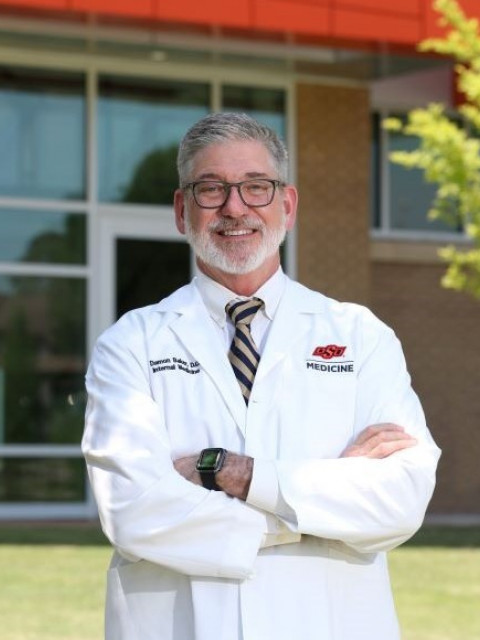
by Damon L. Baker, DO, MACOI
August 4, 2026
As many of you may know, the theme of ACOI 2026 is Connecting to the DO Within—IM: the Osteopathic Way. Kudos to this year’s Program Chair Watson Ducatel, DO, MPH, FACOI. I cannot think of a more relevant or timely theme. Many of the lectures will have accompanying OMT didactics. There will also be many hands-on OMT workshops at the meeting.
I was discussing this with an old friend and colleague Anthony Ottaviani, DO, MACOI, at the recent AOA House of Delegates. Tony was concerned that we are not defined by manipulation alone, but by the osteopathic principles and practices, of which manipulation is just a part. He also emphasized how it isn’t just “whole-person care.” It is care for the mind, body, and spirit. Dr. Ottaviani gave me the inspiration for this month’s column.
As osteopathic physicians, we are often asked a simple question: "What makes a DO different?"
One of the challenges of writing about osteopathic identity is that we have spent years allowing others to define us by what we do rather than how we think. The Osteopathic Principles and Practice provides a much richer framework.
Too often, our answer begins and ends with osteopathic manipulative treatment (OMT). While OMT remains an important component of our profession, it has never been the entirety of osteopathic medicine. If the osteopathic identity can be summarized by a set of techniques, then we have missed an opportunity to explain who we are and what we represent.
At its core, osteopathic medicine is a philosophy of care rooted in a set of principles that remain remarkably relevant more than a century after they were first articulated.
We believe that the person is a unit of body, mind, and spirit. We believe that the body possesses self-regulatory and self-healing mechanisms. We believe that structure and function are reciprocally interrelated. And we believe that rational medical treatment derives from an understanding of these principles.
These are not historical curiosities confined to a classroom lecture or an accreditation standard. They are practical concepts that influence how we approach patients every day.
The principle that structure and function are interrelated may be the most easily overlooked in modern medicine. It extends far beyond the musculoskeletal system. We witness it throughout medicine. For example, diseased coronary arteries affect cardiac function. Chronic kidney disease alters nearly every physiologic system. Structural barriers within our healthcare system can impair access and outcomes just as surely as an anatomic abnormality can impair physiology.
In many ways, this principle applies not only to the human body but to the organizations and communities we serve. Structure influences function. The systems we build determine the outcomes we achieve. Whether caring for patients, designing educational programs, or leading healthcare organizations, osteopathic physicians have long understood the importance of examining the underlying framework rather than merely treating the visible symptoms.
Likewise, the concept of body, mind, and spirit is often misunderstood. It is not a slogan. It is a reminder that illness occurs within the context of a human life.
The patient with diabetes may also be struggling with depression. The patient with heart failure may be caring for an ailing spouse. The patient with chronic pain may be wrestling with fear, isolation, or uncertainty. Successful treatment requires understanding not only the disease but also the person experiencing it.
As internists, we manage complexity every day. We navigate multiple chronic conditions, competing priorities, and increasingly sophisticated therapies. Yet perhaps the greatest strength of osteopathic medicine is that it encourages us to resist reducing patients to diagnoses, laboratory values, or imaging results.
Instead, we ask one additional question: "What else is contributing to this patient's health?"
That question reflects another foundational osteopathic principle: the body's inherent capacity for self-regulation and healing. Our role as physicians is not merely to fight disease. It is to help create the conditions in which healing can occur. Sometimes that requires medications, procedures, and advanced technology. Sometimes it requires education, encouragement, and advocacy. Most often, it requires all of these.
The practice of osteopathic medicine has always embraced science while recognizing that health is influenced by factors that cannot always be measured by a laboratory report.
In an age increasingly shaped by artificial intelligence, predictive analytics, and precision medicine, these principles are more important than ever. Information is abundant. Technology continues to advance. But wisdom, judgment, empathy, and human connection remain irreplaceable.
These are not uniquely osteopathic virtues. They are the virtues of good physicians. What osteopathic medicine offers is a philosophical framework that intentionally cultivates them.
This philosophy reminds us to look for connections. It challenges us to understand the relationship between structure and function. It encourages us to appreciate the dynamic interaction of body, mind, and spirit. It calls us to see patients not as a collection of organ systems, but as human beings whose health is shaped by biology, circumstance, environment, and purpose.
That is why I am proud to be an osteopathic physician. Not because of a technique or a slogan, but because of a philosophy that continues to guide how we think, how we serve, and how we care for our patients.
As members of the American College of Osteopathic Internists, we are the stewards of that philosophy. Our responsibility is to preserve it and to demonstrate its value through our actions every day. In a healthcare system that often prioritizes speed over understanding and transactions over relationships, I believe doing so now is more important than ever.
Damon L. Baker, DO, MACOI
President, American College of Osteopathic Internists